Translate Caskstrength!

Tuesday, 11 March 2014

Timeless (and Ageless) Japanese Delights: Suntory's new Distiller's Reserve Yamazaki & Hakushu


Wow, what an extraordinary month it has been for whisky chatter so far. Any more of this excitement and we'll have to take a short nap somewhere quiet and friendly -  Rum or Armagnac perhaps.  ;-) 

First up and a large contingent of the online whisky community got its knickers unnecessarily in a twist about the unknown future of Scotch whisky and the terrifying looming spectre of No Age Statement whiskies. We'd like to issue a zen-like calming call to all those bloggers concerned: Take a deep breath and pour yourself something nice (maybe even N.A.S?)...whisky isn't broken quite just yet - we promise. 

Right on cue, Diageo, (seemingly the target for much abuse this past week especially) unveil a new range of Mortlach expressions AND a monumental stepping stone in the history of Brora. Two fairly hefty (and polarising) statements in the malt whisky world, by any stretch of the imagination. Whilst we'll reserve our judgment call on the 'Mortlach Scenario' (which sounds very much like a new Dan Brown novel) until we have actually tasted the liquid (makes sense, does it not chaps?) we can at least be thankful that there is plenty of excellent whisky left out there and the prospect of the industry moving forward yet again in the eyes of the every day consumer looks extremely positive in our view. 

Then the largest players in the world of Japanese whisky Suntory announces two brand new No Age Statement expressions, which will radically change the landscape of the international appetite for its whisky. 

It seems, as if No Age Statement-itus is catching folks... Better run and take cover. 

Stirred 13-and-a-half times?
A classic Highball
Suntory's latest brace of releases focus on the specific styles of their two malt distilleries, Yamazaki and Hakushu. The former, widely regarded as the very first Japanese whisky distillery celebrated its 90th anniversary last year and has long been a firm favourite here, for pushing the boundaries of flavour and versatility in whisky. 

In the 12 year old expression of both distilleries, Suntory have defined, in our opinion, (with the addition of Nikka's From The Barrel) the delicate simplicity of the Mizuwari (or Highball with sparkling water) -  a drink so perfect in its construction that lengthy tomes have been written about the correct number of times one should stir the mixture of whisky, ice and supremely clear spring water - Suntory reckoning that 13-and-a-half times is the pinnacle of excellence.  

So why bring out two new whiskies- The Distiller's Reserve range - especially lacking in age statements?


Well, like every whisk(e)y company in the world, times are a'changing and global demand for aged Japanese stock has meant that there is precious little out there - especially in Europe. With such an unprecedented focus on world whisky, Suntory have been smart enough to create two distillery defining expressions that not only deliver big on flavour, but also won't cost the earth, given the inevitable price rises of the 10, 12 and 18 year old expressions.  

Suntory Chef Blender Shinji Fukuyo pointing
out his predecessors  
At a launch last week in central London, both these new Japanese expressions were formally unveiled, after a highly successful introduction in the domestic market. We were lucky enough to join Shinji Fukuyo, Chief Blender and General Manager of the Whisky Blending and Planning Department at Suntory; the man responsible for creating the new range. Introducing the whiskies, Mr Fukuyo revealed that one of his daily responsibilities is to sample 300 different casks from the Suntory inventory, so with so many parameters to play with, putting these whiskies together was never going to be easy.  

And it wasn't.  

'After my first experiment, I was scalded by my boss,' he jokingly revealed, as we began to delve into the core component parts of both whiskies. But without a doubt, his second attempts have squarely hit the mark, both whiskies delivering what could accurately be described as the core flavours of each distillery: Yamazaki, known for its rich, well-rounded red berry fruit and lighter citrus zest - and Hakushu dialling in a little smokiness alongside a malty core, surrounded by soft orchard fruit and a little spice.   

Cask samples
Both expressions are formed by careful use of different cask styles, which Suntory have explored individually in their own dedicated bottlings. In the Yamazaki Distiller's Reserve, we were treated to cask samples from a Mizunara oak cask (a strain of oak unique to the Far East) which delivers a totally original and highly flavoursome spice note, reminiscent of Japanese incense. Alongside this, a sample from a cask of sherry matured whisky aged for around 20 years, complete with its big, bold and robust earthy dryness.  But an interesting additional Bordeaux wine cask finished whisky hinted at where much of the well-rounded red berry fruits and additional dryness in the new expression comes from.  

The Hakushu Distiller's Reserve comes from a totally different flavour profile altogether. Samples of lightly peated and heavily peated Hakushu were tried alongside a frankly astonishing sample of first fill bourbon cask Hakushu - if you happen to chance on a bottle of this style of Hakushu (there are a few floating around at good indie retailers) grab it - the tropical fruit notes will change your perception of whisky making forever.  (in fact see our review of this expression here)

So individually, each cask style delivers a distinct 'colour' to the overall picture. But what are they like when combined together?  'Stupendous'  is one word we would happily use.  
Yamazaki -  Distiller's Reserve -  43%  - No Age Statement - RRP under £40

Nose: A lightness hits first, with subtle vanilla and lemon zest, leading into fresh strawberries, a little milk chocolate and some golden syrup. There is also an emerging spicy/incense note, which develops with the addition of water.

Palate: The fruit becomes more intense, with fresh fleshy white peaches, a hint of raspberry, a dryer oaky note, vanilla essence and a twist of lemon zest.  It is vibrant and youthful, but still full of fabulous character.

Finish: Sweeter fruity notes linger, with an overall tannic background.

Overall: A superb start. This encompasses all the hallmarks of the 12 year old Yamazaki, but leads it into a new fresher styling.  Very clever whisky making and a steal for the retail price.
Hakushu Distiller's Reserve -  43% - No Age Statement - RRP under £40

Nose: Wonderfully fruity with soft pears, a touch of green apple peel, fresh mint, vanilla, a slight damp mossiness and a waft of very fragrant smoke -  enough to drive the heart of the distillery character but not too in-your-face for those who find peat too much of a distraction.

Palate: A lighter fruit develops first with fresh honeydew melon, sweet vanilla, the floral smoke mixing with a charred herbaceous note. With water, it really develops, the fruit starting to integrate wonderfully with the smoke.

Finish: The smoke is left on the palate, with a subtle fruitiness and a hint of oak.

Overall: Another fantastically balanced whisky. Hard to pick out a favourite here, as both whiskies deliver so much character within their 'house' styles.  We would recommend both of these side-by-side - especially if you're planning to have a go at your very own entry into the Mizuwari/Highball phenomenon!

Make no mistake: Suntory have undoubtedly released two game-changing No Age Statement whiskies here.

Anyone still left ranting, please form an orderly queue.

Expect to see both these whiskies at either Master Of Malt or Whisky Exchange soon.  


Thursday, 6 March 2014

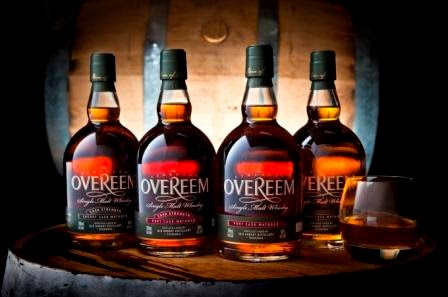
Streuth! A Quick Chat With Casey Overeem, Founder of the Old Hobart Distillery


'I'll never forget meeting my uncle in Norway many years ago now', says Casey Overeem, with a smile on his face.  

'When I arrived at his house, he said (in his somewhat broken English) 'Casey...you... me... friends'... and we went down into his cellar - and there in a cupboard, dripping away, was a little still.  After a few minutes we had a glass worth each and he said Skal! Well, I thought he meant 'Skull' (meaning 'down in one') which probably wasn't the greatest thing to do with spirit straight off the still at 70%.' 


This was the first experience of distilling for the highly affable and down-to-earth Overeem and clearly, the brutal, high strength spirit he had just knocked back must have made its mark in more ways than one. Today, The Old Hobart distillery which Overeem founded back in 2005 is steadily securing a reputation around the world for arguably producing Tasmania's best whisky, with new fans discovering the small but exquisite range mostly on the recommendation of those in-the-know or from the growing number of glowing reviews. We can put our hands up and say that we are keen supporters of the work Casey and his team are doing, first trying the range of four whiskies last year purely by chance.


To say we were impressed would be an understatement. We caught up with Casey on a recent visit to London to discuss the ethos behind the distillery and what he believes is the secret behind the burgeoning whisky scene in Tasmania. 


First up though, we're keen to find out what made Casey continue with his fascination into distilling after such a highly spirited introduction.

'Well I wasn't a whisky aficionado or anything like that. It was really down to my experience in Norway,' he explains. 'I said to Greta, (Casey's wife) i've gotta build one of those stills when we get back home. I basically got a beer vat and started brewing using sugar as the base - like a rum.  Well, that didn't taste much good at all, so we really started doing some proper research about cut points and then over the next five years we learnt to make whisky.' 

Back then, it was a case of Casey sticking his finger in the glass and setting it on fire to determine the stage of the spirit run, but now, after running Old Hobart for around a decade, everything seems to have settled into its right place. 

'Now we don't really have any specific technique to determine cut points etc, it's all done by nose as the runs are so consistent,' he points out. Our stills are made by a guy in Hobart called Peter Bailey- he does everything from copper shaping to welding, boiler making and still design,' he continues, 'which is why I guess distilling has taken off so well in Tasmania. We have two stills: a wash and a spirit, with electric heating elements underneath, which makes them very clean inside. We tried to emulate what would have happened when they were direct fired from underneath. When I was in Scotland, I took a load of pictures of different stills, mainly for the lyne arms, particularly the ones which gave a heavier, more oily new make spirit which is what I was looking for. I think you'll find ours bears a certain resemblance to a popular one on Islay', he says grinning... 'They're such a special bunch of distillers there - and we owe them a lot of gratitude as they were very helpful when we were setting up the distillery.'


So how many casks do you fill now? 

'We fill about one barrel a week now- maybe 60 in the course of a year, all into 100 litre first-fill casks. 

'So a very small outturn then?

'For sure. Funnily enough, a mate of ours was visiting Islay recently and mentioned to a distiller that he had a friend who owned a distillery back home. The distiller asked how many casks we were filling and laughed when our mate told him."We probably spill more than that a year", was his response!'

'How did you determine what sort of wood you wanted to use?'

'Well Bill Lark (owner of the Lark distillery and one of the founding fathers of the resurgence in Australian whisky making) and I went to Scotland in 2005 and one of the head distillers on a tour said that if they could afford it they would mature everything in 100 litre barrels, so Bill took that on board and I followed suit. Nearly everything we fill into is from cut down ex-Australian port or sherry casks from French oak - filled at 63.5% - but the Angels' Share is extremely high here. In five years we've probably lost about 20% of the spirit. We'll usually get about 180 bottles (at 43% strength) from each cask and although each barrel is consistent, there will be subtle differences in each bottling, but we're hugely proud of each one.' 

Have you tried maturing in anything bigger?

'We did try a 200 litre and it was very good indeed, (a mythical bourbon barrel bottling, which we have yet to try) but anything smaller takes a lot of colour but doesn't give us the quality of flavour we are looking for. Interestingly, I think the whisky is really peaking around five years -  the oldest cask I have is about six-and-a-half years old and i'm not convinced it's getting better. But there's a significant change in the last few months of maturation: the difference between the whisky at four-and-a-half to five years is profound.' 

Have you tried using any refill casks? 

'I reckon i've got about 25 or 30 refill barrels that i've filled - some port and some sherry- but i'll have to wait longer, probably 7-8 years to get what i'm looking for from them. But I really don't want to change the recipe of what we do, as we don't make enough to do many risky experiments with.'

Would you say you've learned a number of different lessons as a distiller over the years?

'Two things spring to mind. Firstly, making the whisky is the easy part!  But secondly, getting everything else right - ie getting people to put your whisky on the shelves and then into the hands of drinkers is another thing. It's taken a long time for Tasmanian whisky to become accepted and to be early in an emerging scene is a challenge, but it's also good as we're finding people are likely to take a real chance on you.'

So is there a good camaraderie between the other Tasmanian distilleries?'

Very strong indeed. We share ideas and we promote the idea of Tasmanian whisky together in bars and wherever we can, as well as meeting often and sharing a dram together. It's like a piece of rope: single strands have no strength, but put many of them together and you have some real pulling power.'

What makes Tasmania such a great place to make whisky?

'The climate is ideal really - we have a bigger temperature range than Scotland- good dry air which creates some movement through the barrels, some exceptional soft water and we grow some of the best barley in the Franklin variety- it's a strain which is now on its way out, but was sought out the world over for brewing beer. And of course passionate people!'

Jane Overeem, carrying on Casey's
knack for making Tasmanian whisky
So where do you see it going, over the next decade?

'Well I did this as a hobby originally!' he laughs. 'My daughter Jane has been pressing me for an answer like that too. She's an integral part of what we have done and ten years later, here we are. You only have one life and this has certainly been the most exciting part of mine and the most high profile.'

As we wrap up our interview at the Southbank Centre on the River Thames, with a backdrop of London at its finest, it dawns on us that it must make Casey feel proud that his whisky has literally come such a long way.

'It's totally humbling when you consider the origins of where it all started,' he points out. 'In fact, if you look at the cap on the bottle, you'll see it says three words: Born Of Promise.  I made a promise to myself when I started that I wanted to get a bottle on the shelves in Holland, where my father was born and the very first international order we had was from a shop in Holland - Van Wees. What was remarkable is that it turns out the shop was only 10km from where he grew up and was in the town he did his apprenticeship! 

Fate moves in strange ways...

To read our review of the current range of Overeem whiskies distilled at the Old Hobart distillery, click here. 


For more info on the distillery itself, visit: www.overeem.co.uk


Tuesday, 4 March 2014

Flight Of Fancy - Brora 40 Year Old Single Malt Whisky Travel Retail Exclusive


As I sit down to type this, may I refer you to our last post on Caskstrength. Whisky is truly an extraordinary thing. After all, it has for the past seven years filled pretty much my every waking hour in some capacity. It has helped form wonderful and lengthy friendships and it has also fuelled many a lengthy debate- in person and online.  But the bottom line is that there is clearly no other spirit in the world like it for bringing people together in anticipation of what delight they are about to try.  

The first time this happened for me was over 16 years ago now, with a group of several close friends.  We selected three single malts that we felt would be the pinnacle of excellence: the gateway into genuine appreciation for a drink, which I had never experienced before (being a reckless teenager and all that- then at university trying to emulate the life and times of Withnail.)  

In most cases, single malt opens one's eyes to a genuine respect for a spirit. It has that air of intrigue and the hand of genuine craftsmanship firmly upon it -  regardless of whether it carries an age or not. The night we selected three different single malts (a Cragganmore 12 year old, a Laphroaig 10 year old and a Glenmorangie 10 year old) I realised that something had changed. Over the course of three or four hours, I developed an understanding of how to really enjoy drinking without actually getting drunk. Each of these exceptional whiskies had a completely unique personality- for my other co-drinkers, the Laphroaig's bold, abrasive fiery temperament being the anthesis to the Glenmorangie's smooth and understated delicacy. Personally, I loved then all and to this day, those same three whiskies (different bottles of course) still grace my drinks cabinet as well as the one here in our office.  

Today, that drinks cabinet has one additional bottle; one much smaller in size, but equally profound.  

It contains a sample of 40 year old Brora, drawn from a single cask filled in 1972. For those of you who don't follow this blog regularly, Brora has become one of the trio of near mythical whisky distilleries (along with Port Ellen and Rosebank) closed down and long forgotten, until perhaps the last decade or so. Releases from these three are scarce, with Diageo owning the remaining (fast diminishing stocks). This Brora sample comes from a bottling done especially for Global Travel Retail in the Middle East and only 160 bottles will be available, each coming in a decanter and carrying the price tag of a shade under £7,000. So extremely rare and extremely expensive.  


Today, I am reminded of that very same sense of intrigue that first drew me into whisky and undoubtedly what led me to find a career in writing about it. Samples arrive at our office on a daily basis and every now and again, they genuinely stop you in their tracks: from the fantastic Overeem whiskies of Tasmania that arrived out of the blue (and totally blew us away) to an as-yet unreviewed and very, very old whisky, which we shall unveil later this week.  This sample of Brora is one of those moments. In fact, as I open the sample, I genuinely don't know what to expect...

Brora - 40 Year Old - Single Cask 1972 Vintage -  160 Bottles  - 59.1%

Nose: Where to begin.  'Lively' is a word that usually applies to whiskies only a fraction of the age of this elder statesman. But this has a real fire from the get go. Hugely peated (easily the most peated Brora I've come across) this could pass as a Caol Ila or perhaps even a younger Lagavulin. But underneath the peat lies some soft malt, linseed oil, Brazil nut shells, sweet vanilla and a cloud of white pepper - alongside a familiar slightly wet hay note that Brora often has. Would you really peg this as a 40 year old whisky though, if nosing it blind? I doubt it. The extremely high ABV helps to keep your nose guessing and only a little water reveals its true character. With a dash, stewed summer fruit aromas come to the fore alongside a little liquorice, carbolic soap, fresh mint and leather.  

Palate: Initially very sweet with a powerful chewy wood smoke. Buttery notes follow with some ripe bananas, more tingling white pepper and the first signs of oakiness. The strength is still right up front and in all honesty, is slightly distracting- again you wouldn't peg this as a whisky in its 4th decade. The water brings things down perfectly with dried ginger notes, rich shortcake and summer fruits, dark brown sugar and a beautifully aged peat note. That's more like it.  

Finish: A wash of wood smoke stays on the palate, alongside a tingling pepper, some traces of oak and a little creaminess, dusted with icing sugar and coated in dark honey. To say this is lengthy would be an understatement, thanks in part to the peatiness, but the mouthfeel (with water) is truly excellent.  

Overall: A huge surprise. This really won't be for everyone's tastes. Rather like that first encounter my friends and I had with Laphroaig, the smoke in this Brora is extremely dominant and not for the faint hearted. But dig past this and you'll be dazzled by what lies underneath. There are layers of complexity here which only an old whisky can deliver, but still signs of youth too, given the spritely ABV. It is, in essence, a very challenging whisky - and like that very first proper encounter I had with single malt, almost impossible to put down as a result.  

Turn the lights off and lock up will you, Joel... I may be here for some time yet...


Tuesday, 25 February 2014

Scandimania: Glenmorangie 10 Year Old Original Single Malt Whisky


I do love modern technology. When you really sit back and think about some of the technological advances we have at our finger tips, it really does amaze. In fact, as I write this I am a living embodiment of how incredible technology is: I have a battery powered bluetooth keyboard which is connected to an iPad mini. The keyboard itself is sensitive to light and will only provide backlit keys when the light is low. I'm told by the manual that if the backlight isn't used, at two hours a day usage, the battery will last an entire year. Longer than most of my whiskies last me.

Add to this my current location: I'm sitting in an airline seat, on a giant hunk of metal currently hurtling through the sky at… let me check on the screen imbedded into the seat in front of me where I have a GPS readout of exactly where my plane is in the sky... yes, at 504 mph (ground speed).

The whole thing, this amazing mix of technology, is pretty mind blowing, really.

We live in an incredible time when we have technology like this at our fingertips and we eat and drink better than the most successful kings in history. We are very blessed people.

But as technology develops, some (which were hyper-exciting at the time) become obsolete. Take the entertainment centre in the seat in front of me: I remember my first ever long haul flight when I was about 12, flying to Canada for an extended family holiday. The sheer excitement of films, TV shows, games... all hidden behind a small screen to play with for hours was amazing. Nowadays, not so.

In fact, such is my distrust of the quality of the entertainment I'm likely to find in-flight, that I've taken to loading up my iPad with all the goodies that I might need. I'm hardly likely to find Alpha Papa: Alan Partridge The Movie, on a US carrier's servers, I feel.

In loading up my iPad with titbits of entertainment, I took to downloading the final episode of Hugh Fearnley Whittingstall's Scandimania, a show which has aired in the UK on Channel 4. Known for his very British approach to cooking, HFW (as we shall refer to him) went on a mission to discover what it is that makes the people of Sweden, Denmark and Norway so darn happy. Over three shows he left his comfort zone and went in search of the stories about industry, history, culture and food.

I had previously managed to see his shows on Sweden and Denmark when they were broadcast, but missed the final show, all about Norway and so used C4's on demand service, 4OD, to download it onto my iPad for this flight across the Atlantic.

The show was of particular interest to me, as regular readers to caskstrength.net will know that I am a Norwegian passport holder. Now, I would be the first to admit that I'm not the best when it comes to upholding simple national traditions, such as speaking the language. 

Shame on me. 

Nor do I own the national dress and I rarely celebrate 17th May (Norwegian Independence Day).

However, there is an undeniable affinity that I feel with Norway and in particular the city of Bergen. Seeing it feature on the show made my heart beat a little faster and a smile creep across my face for a place I spent most summers as a child but precious few days as an adult.

In his final episode of Scandimania, HFW singles out Norway for its understated success; now the fourth richest country in the world, you may well find Norwegians in the best shops in London, but you sure-as-$hit wont find them having their matt black Lamborghini clamped outside Harrods or buying Premiership football clubs. They leave that type of 'class' to other wealthy nations.

Watching the show led me to wonder: if Norway was a whisky, which would it be? The answer was pretty simple: Glenmorangie.

Always around and one of the biggest selling single malt Scotch whiskies in the world, Glenmorangie is, despite being owned by uber fashion house LVMH, I think pretty understated. Yes, they advertise and yes, they speak of their quality but they don't seem to shout about it; they just get on with it.

I was recently re-introduced to their entry level offering at the launch of their new annual limited edition Companta (which we review here), the 10 Years Old 'Original' and fabulous it was too. I probably hadn't had a dram of it in about two years and was pleased to find that it was as delicious as I'd hoped it would be. A rare find indeed.


Glenmorangie - Original - 10 Years Old - 40% abv - £29 here or £26 here

Nose: A sweet yet malty nose gives hints of real vanilla pods, banana bread and both green and red apple skins. It is a developed nose that is delicate yet full of flavour. A lot going on without being unbalanced.

Palate: Drinkable neat, it gives some peach, more malt and banana initially on the palate, which develops nicely into lemon meringue pie, mango and a touch of vanilla at the death.

Finish: Soft and smooth with some spice and the vanillas again.

Overall: One retailer above currently has this for £26 for a 75cl which comes with a mini of another of the Glenmorangie stable. A steal? I would think so. This whisky is one to not be forgotten about if you're looking for some change from £30 (here in the UK) for a classic Highland single malt whisky.

The rediscovery of this dram threw me a puzzle: why did I 'forget' about it in the first place? Especially when I have been happily ordering Glenfiddich and The Glenlivet's lower priced bottles rather freely at bars recently. The only answer that I can come up with, is that the Original is rather softly spoken. Rather understated. Rather, erm... Norwegian.  


Monday, 17 February 2014

A Rant Of Sorts. Our Two Pet Hates: Lazy PR and Whisky Ageism

Right then. This might not be pretty. But sadly, we have two particular pet hates which have been irking us this past week:  


No. 1: Extremely Lazy PR companies:  

Over the course of at least three or four emails in the past week, we've received invites or product introductions that have either been addressed to someone completely unconnected to either Joel and I or this website.   

'Dear (insert incorrect random name), we love your blog (insert incorrect random blog title) and have been huge fans for a long time... We'd really like you to feature our product in some capacity, as we feel your readers would really appreciate it...' 

Mistakes happen it seems. Fine with us -  we make plenty of them. But frankly, laziness is more prevalent than ever and the alarming number of shocking 'cut-and-paste' jobs from newly appointed PR companies working on behalf of well known drinks brands is unacceptable. I'm not looking to build a Caskstrength-shaped ivory tower here. But having been privy to just how much money certain companies are paid in monthly retainers to present a brand portfolio to a range of journalists, bloggers and other media sources, to quickly bang out a freshly laundered press release, changing the names to suit (or not, as it would seem) does not represent good value for money or help build relationships for their paymasters.   

Those who are guilty, pull your bloody fingers out. Please do your research and your homework. Actually get to know those who are simply at the end of a telephone or an email. Good relationships cost nothing. Bad relationships are VERY expensive. 

No. 2: The Seemingly Misunderstood World of No Age Statement Whiskies:

A very topical subject this month. Thus far, a few other blogs have featured stand points on NAS whiskies, including observations from Edinburgh Whisky, Billy's Booze Blog, Dramming and Whisky Israel.  

We haven't really commented on this - until now.  

Unfortunately, it seems that there's a real disconnect between what companies produce, why they produce it, who they produce it for and who actually drinks it.  

Let's assess what NAS actually means for a second. At its very best, no age statement whiskies offer something which has sadly been lacking in the category for a long time... PERSONALITY -  see the list a few paragraphs below to understand why we have no problem with the concept. 

Contrary to popular belief in some quarters, it is not a new concept. Lest we forget, Usher's Old Vatted Glenlivet, unquestionably a game changing whisky product when it was first bottled over 160 years ago had no age statement. Johnnie Walker Red Label -  the biggest selling whisky brand in the world, carries no age statement as far as we can see. And recently, Macallan's M Decanter, the most expensive whisky ever to be sold at auction again carried no age statement.  So just to confirm then: The world's first commercial blended whisky, the biggest selling Scotch whisky in the world and the most expensive single malt Scotch in the world -  all no age statement. 

You may turn your nose up at these whiskies - but the fact is that millions of drinkers simply don't give a shit about an age statement - especially in markets other than the blinkered, over-privileged and frankly over-educated ones. The result is simple economics:  You can't just turn the tap on at a distillery and hey presto... a 10 year old appears. If demand keeps on rising, business will dictate that whisky with an age statement will become even more premium- and rightly so. In the UK, and to a large extent, most of western Europe, we have simply taken it for granted that the whisky business revolves around our palates which have been lavished by aged liquid. Sadly, those days are numbered.  But have we really reached the Whisky-poclypse? Of course not.  

A quick glance across at the shelf in our office reveals a number of whiskies:

Talisker Storm, Aberlour A'bunadh, Highland Park Harald (a Global Travel Retail exclusive) Ardbeg Ardbog, Auchentoshan Three Wood,  Balvenie Tun 1401, Kilchoman Machir Bay, an old White Horse blend (ok, not newly released, but newly acquired and without an age statement) Laphroaig Quarter Cask, Ardmore Traditional Cask, Caol Ila Moch, as well as bottle of the Cutty Sark whisky we had the privilege to release and 3D Whisky - ALL no age statement products.  

Of course there will be a couple of duffers out there - we've tried a few that we didn't much care for (Talisker Port Ruighe not being to our liking, but seemingly popular elsewhere) but to tar the whole NAS category as the death knell of the whisky business? Totally illogical.  

At the other end of the spectrum there are opportunities for companies to bottle liquid with a much quicker turn around. This opens up a distinct side issue: The murky world of GTR (Global Travel Retail); now in its own right a sales territory so dominant and lucrative that every distiller in Scotland has undoubtedly had sleepless nights over it. 

A distiller once told us that unless they came up with a new product to put on the shelves as an exclusive, the shelf space available to them would effectively cease to exist or rapidly evaporate. This resulted in a fairly hastily assembled NAS whisky, which whilst youthful, was still filled with personality. Clearly, no one in their right mind would wantonly bottle a whisky that they felt didn't do justice to their brand just to respond to financial blackmail, let's give them some credit. 

Didn't like it? Fine, try another whisky. That is unfortunately the nature of the market place and everything needs to be taken on its own merits.  If it stops you from ever trying another whisky by distillery X, then so be it -  but we think people are probably a little bit smarter than that. Put it this way - I love pies. A lot. I buy a lot of them. If one day I saw that Pieminister were trialling their Wildshroom variety (contains many mushrooms) as a new exclusive flavour and I didn't like it, i'm unlikely to stop buying the Matador (which contains yummy steak and chorizo. (You really need to check these out, by the way)

The bottom line is that most distillers HAVE to have something exclusive (usually an NAS whisky) in GTR for simple economic reasons. But in many cases, the increases in sales have been very healthy, extending the halo effect to the other (age statement) products in their range- proof maybe that smart concepts, coupled with good liquid (a highly subjective concept in itself) a perception of exclusivity, good value for money and a strong brand identity are the key to success, making everyone happy.  There are numerous examples of NAS whiskies which are worth visiting an airport for: Highland Park Warrior Series, The Glenlivet Master Distillers Reserve, Laphroaig PX Cask and Glenfiddich 125th Anniversary (actually now available elsewhere, but we'll forget that) to name but a few. 

The other night, I took an old, age statement whisky and made a cocktail with it. It was delicious. Tonight, i'll probably do the same. This simple act might be viewed as vandalism by some, but to me, it's using something as an exceptional flavour component - in a different way. In the same session, i'll be drinking a particularly young tasting NAS whisky neat, or perhaps with a touch of water -  again an exceptional component of flavour in my glass. I know because I did this last night and absolutely loved it. If whisky can hold a compelling conversation with you, then its age really becomes irrelevant.   

Want to comment on this?  Please hit us up on our Facebook page: or Twitter.  We're always open...